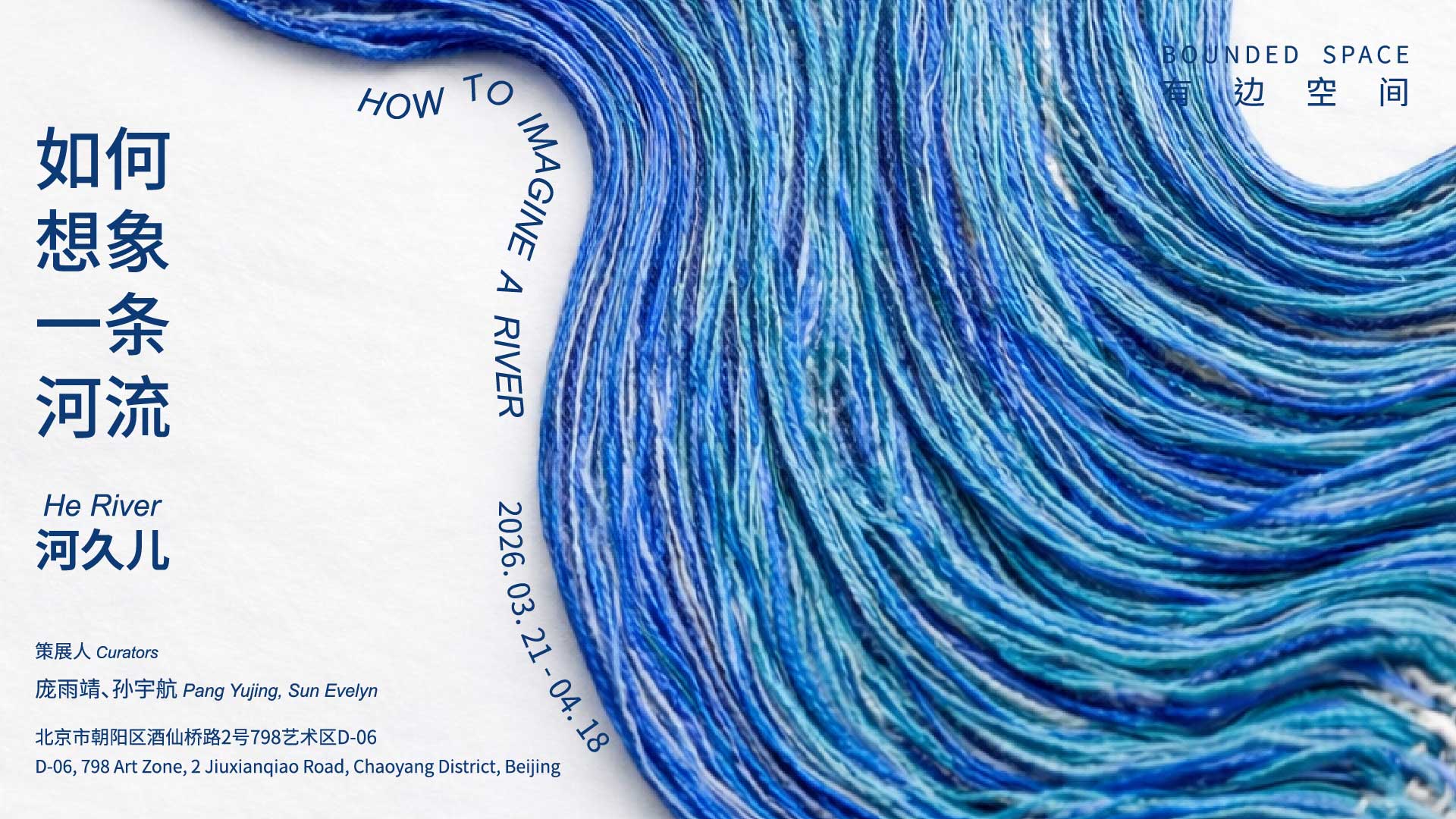
BOUNDED SPACE is honored to announce the solo exhibition of He River — How to Imagine a River, opening on March 21st. Curated by Pang Yujing, Sun Evelyn.
Foreword
How many ways are there to imagine a river? By its physical attributes? By the visual cadence of its flowing ripples? Or by its state—sometimes turbulent, sometimes serene? There are ten thousand ways to imagine a river, for imagination is fluid, and so is the water. It never dwells in a single form; it is always in a state of constant flux and becoming.
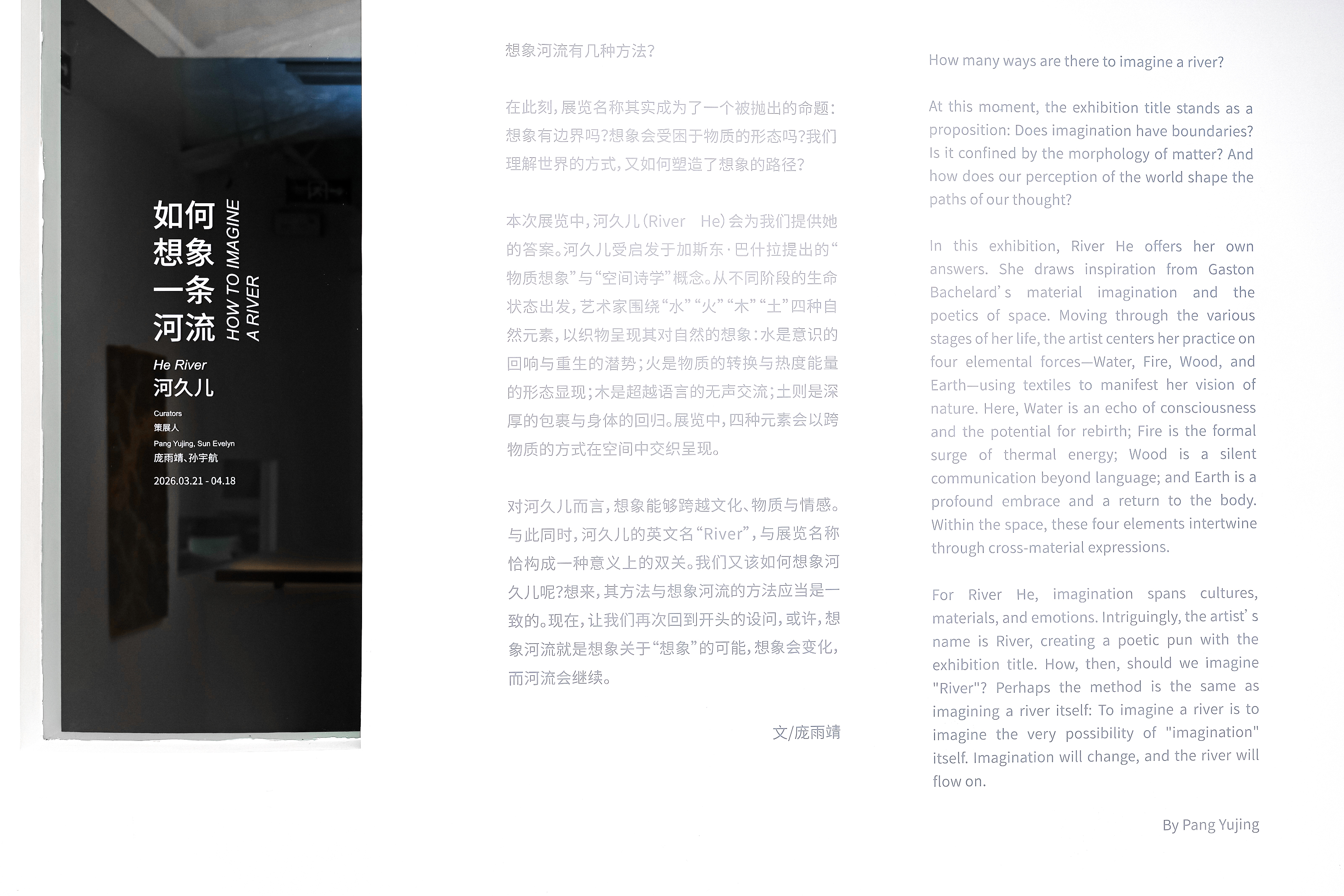
At this moment, the exhibition title serves as a proposition cast. At its core, it invites us to reflect: Does imagination have boundaries? Is it confined by the morphology of matter? And how does our way of perceiving the world shape the very paths of our imagination?
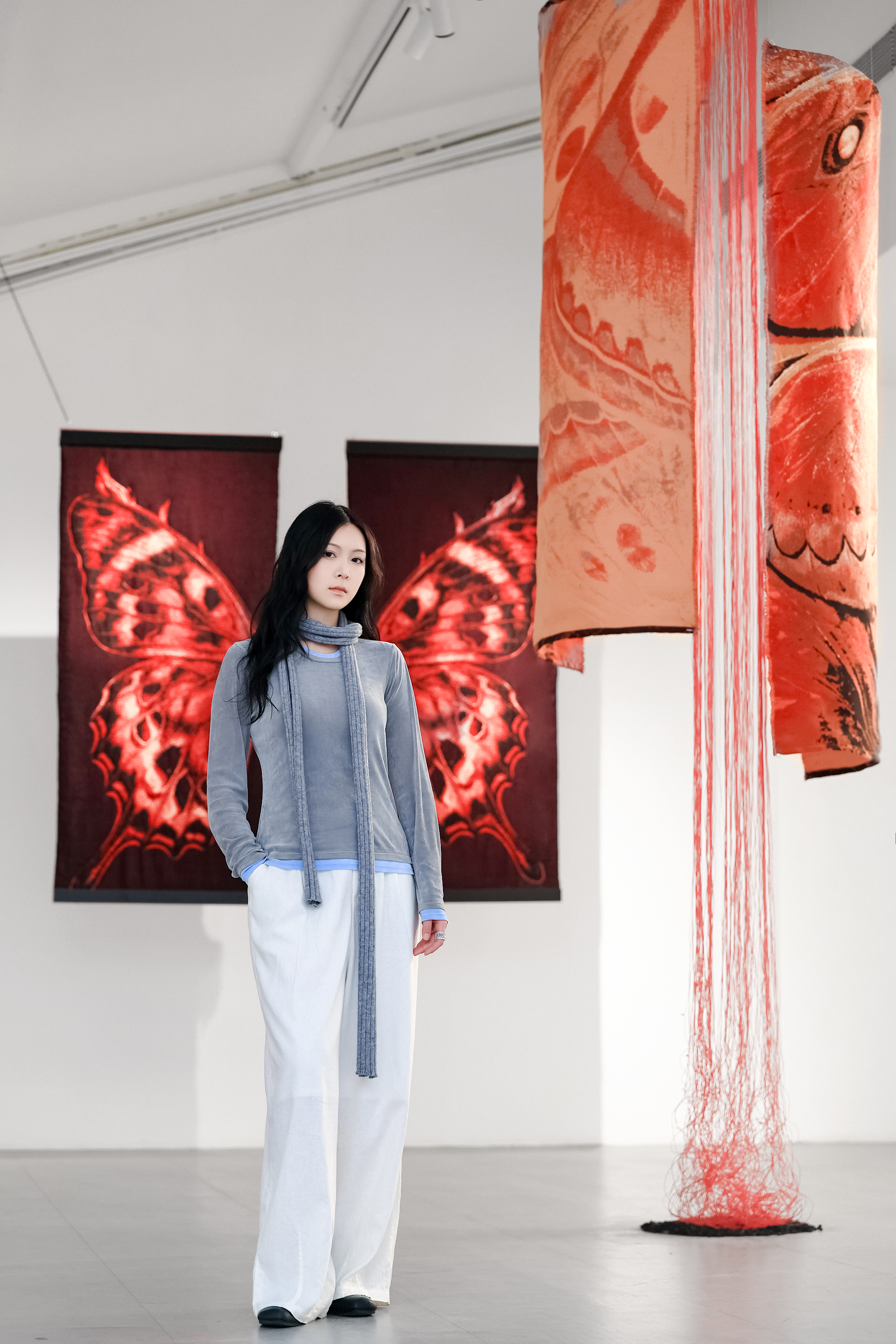
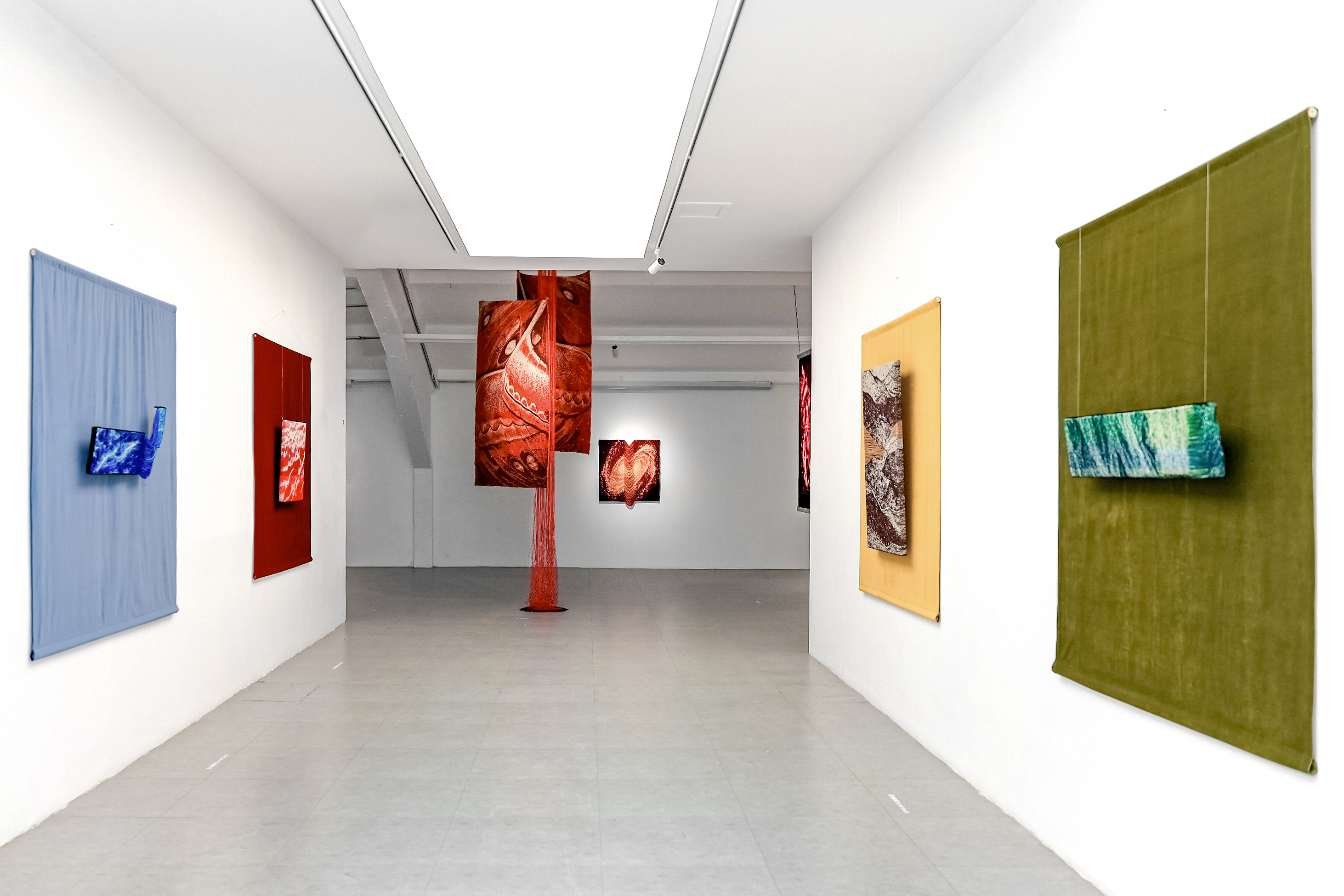
In this exhibition, He River offers her own answers. Raised in the Chongqing, River has been inherently sensitive to natural elements since childhood. She resonates with the concept of "animism" and draws inspiration from Gaston Bachelard’s notions of "material imagination" and "the poetics of space"—the idea that natural elements are not merely objective matter, but catalysts that trigger deep-seated human imagination and emotional experience. Within this dimension, River employs her unique sensitivity, merging the elemental stimulation of perception with textile art to manifest her imagination of nature. Moving through different stages of life, she centers her practice on four elements—Water, Fire, Wood, and Soil—which intertwine through cross-material expressions within the space.
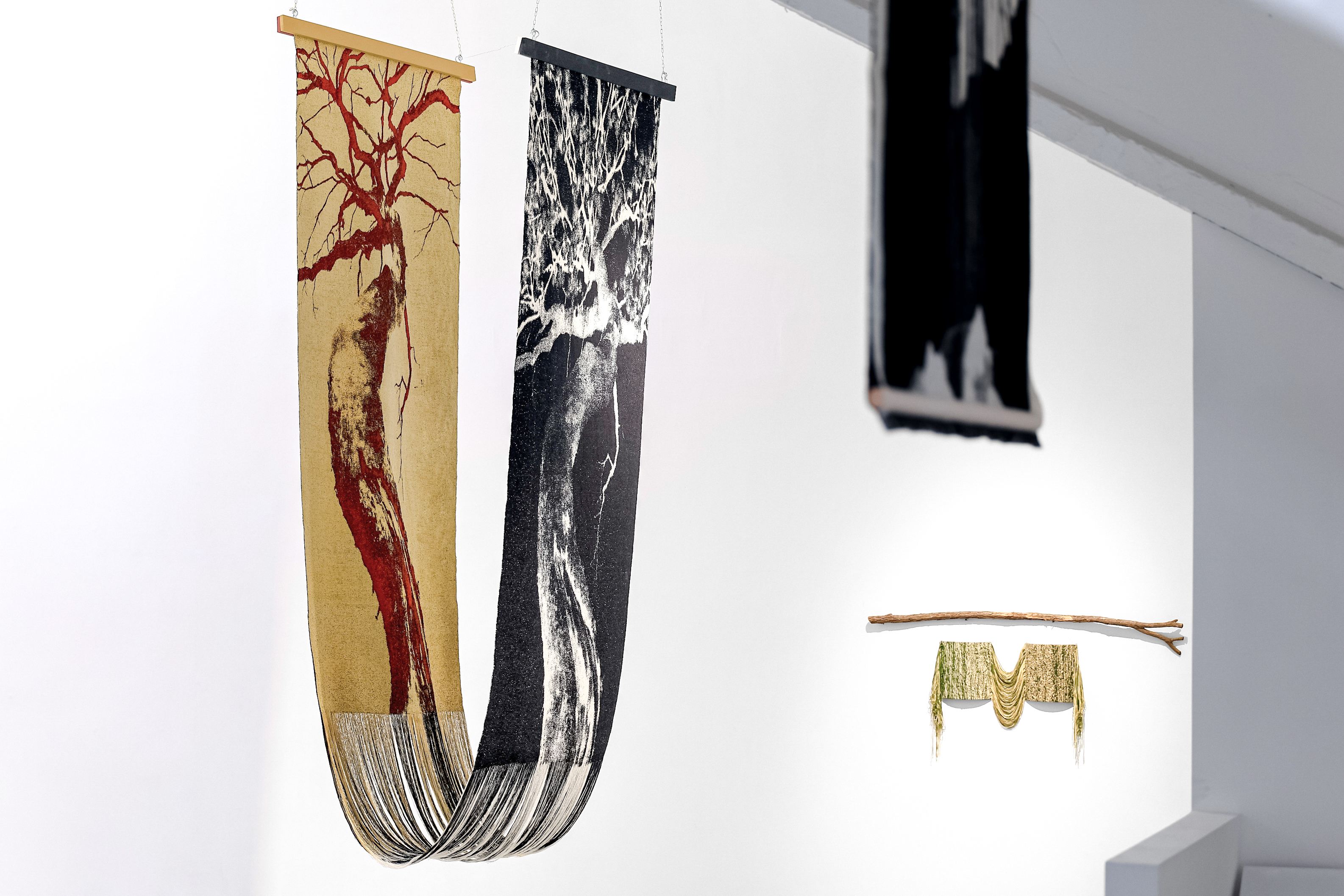
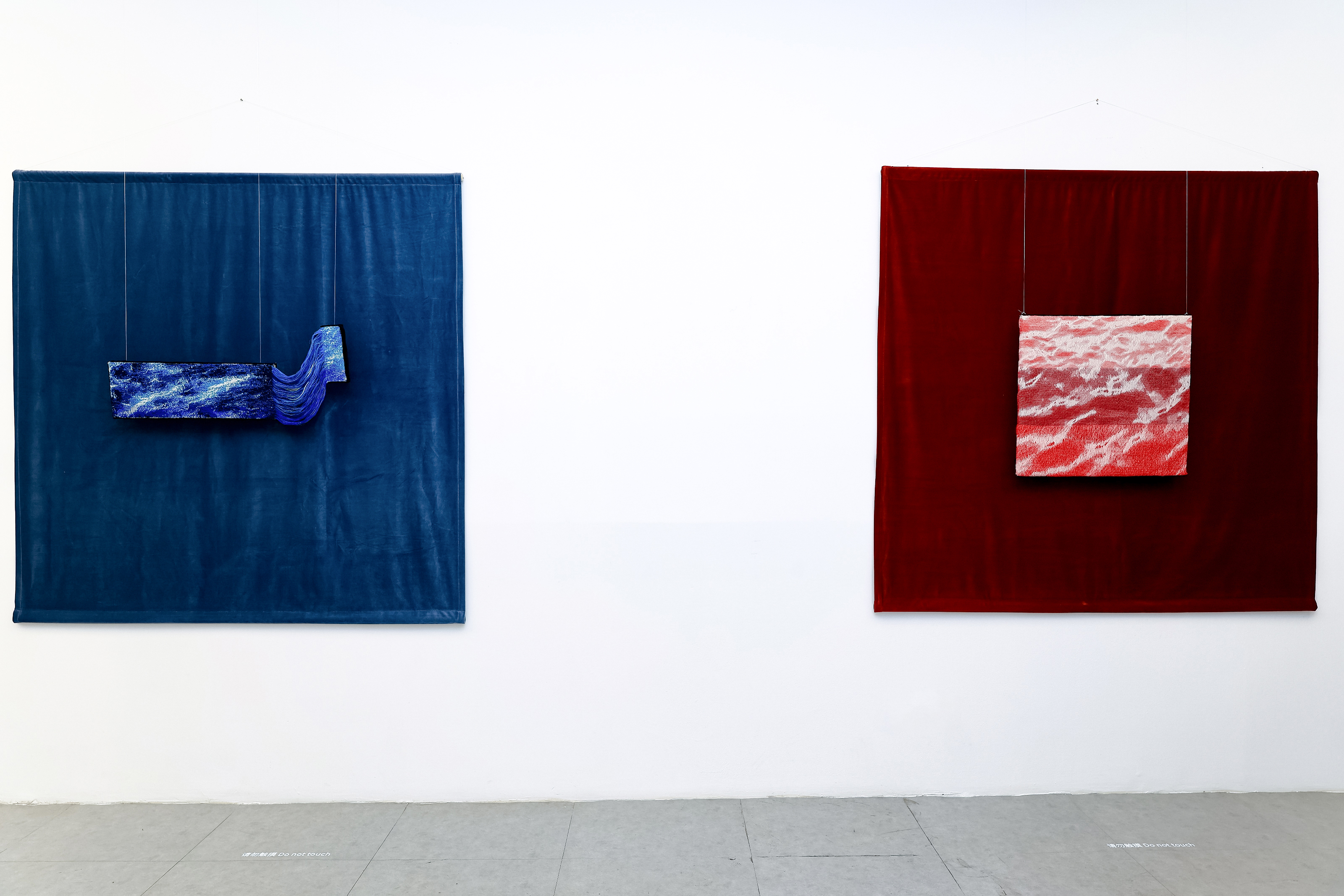
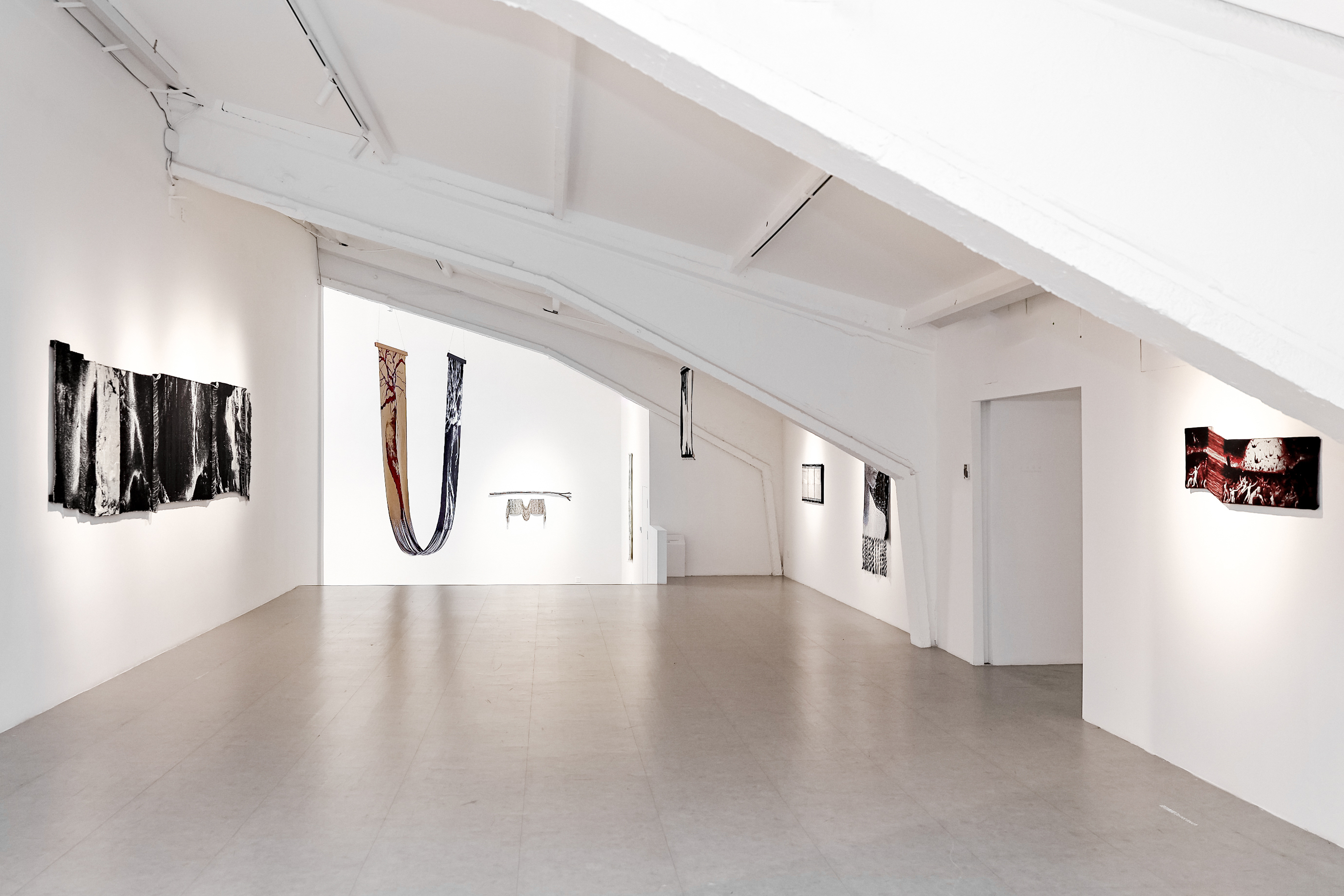
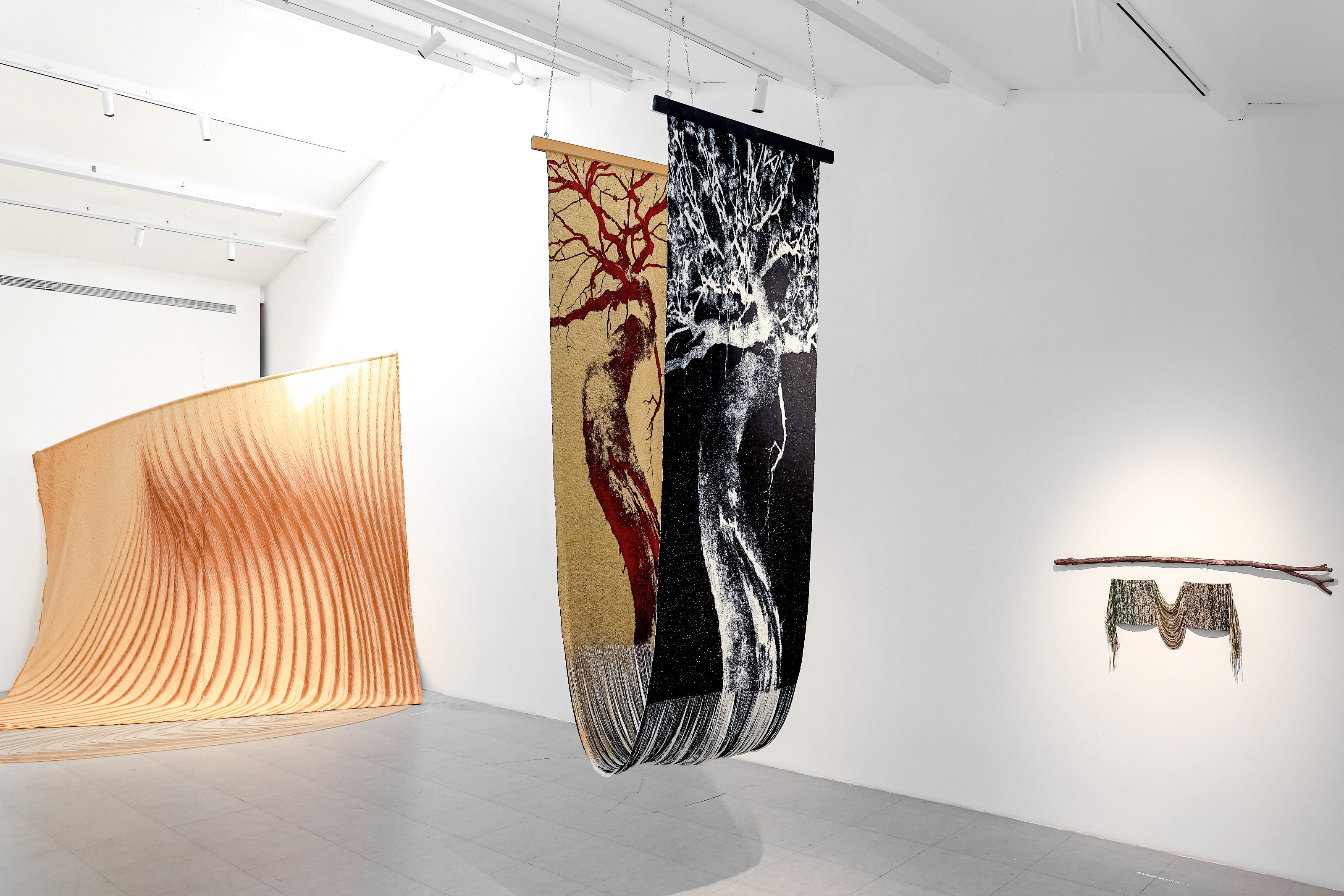
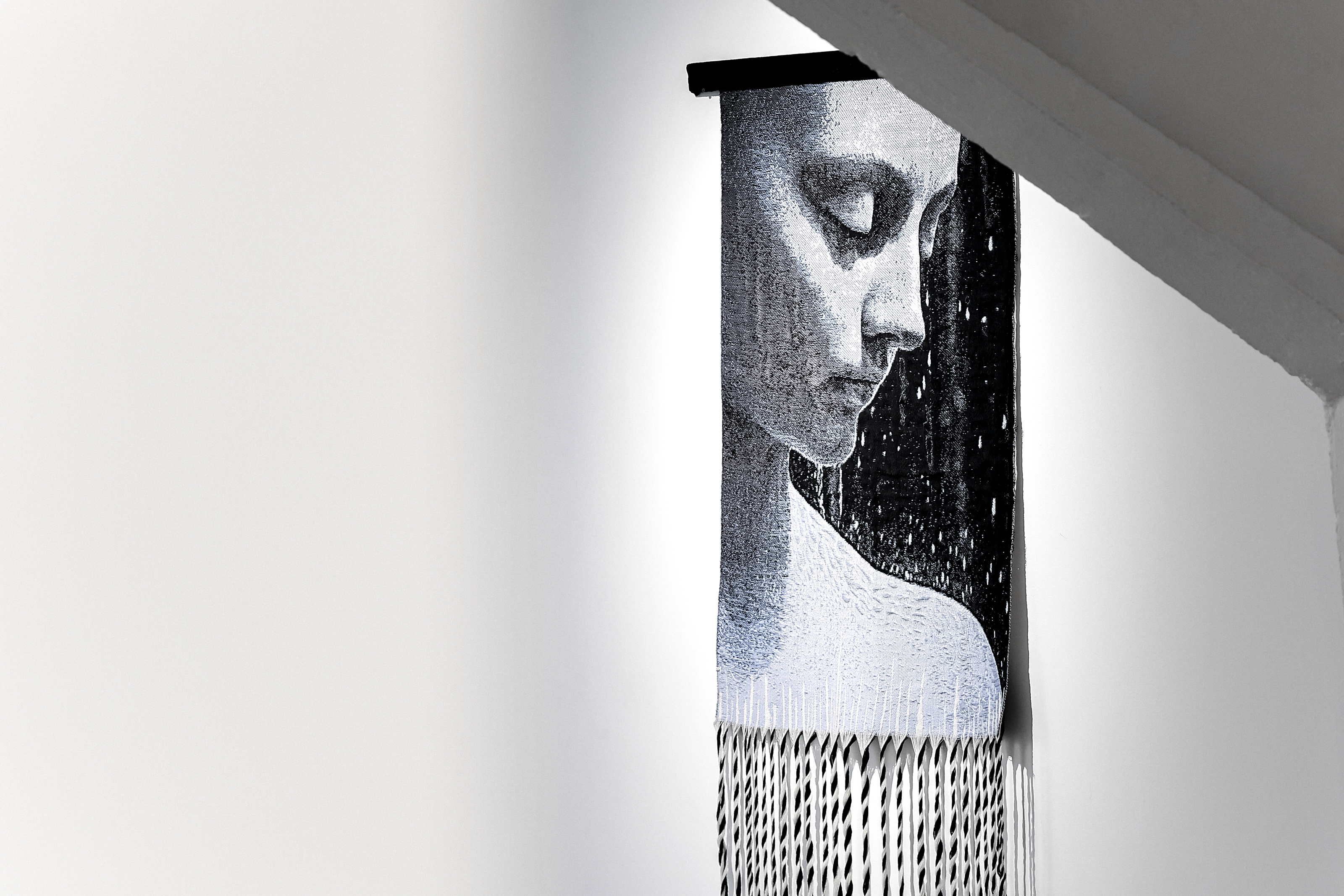
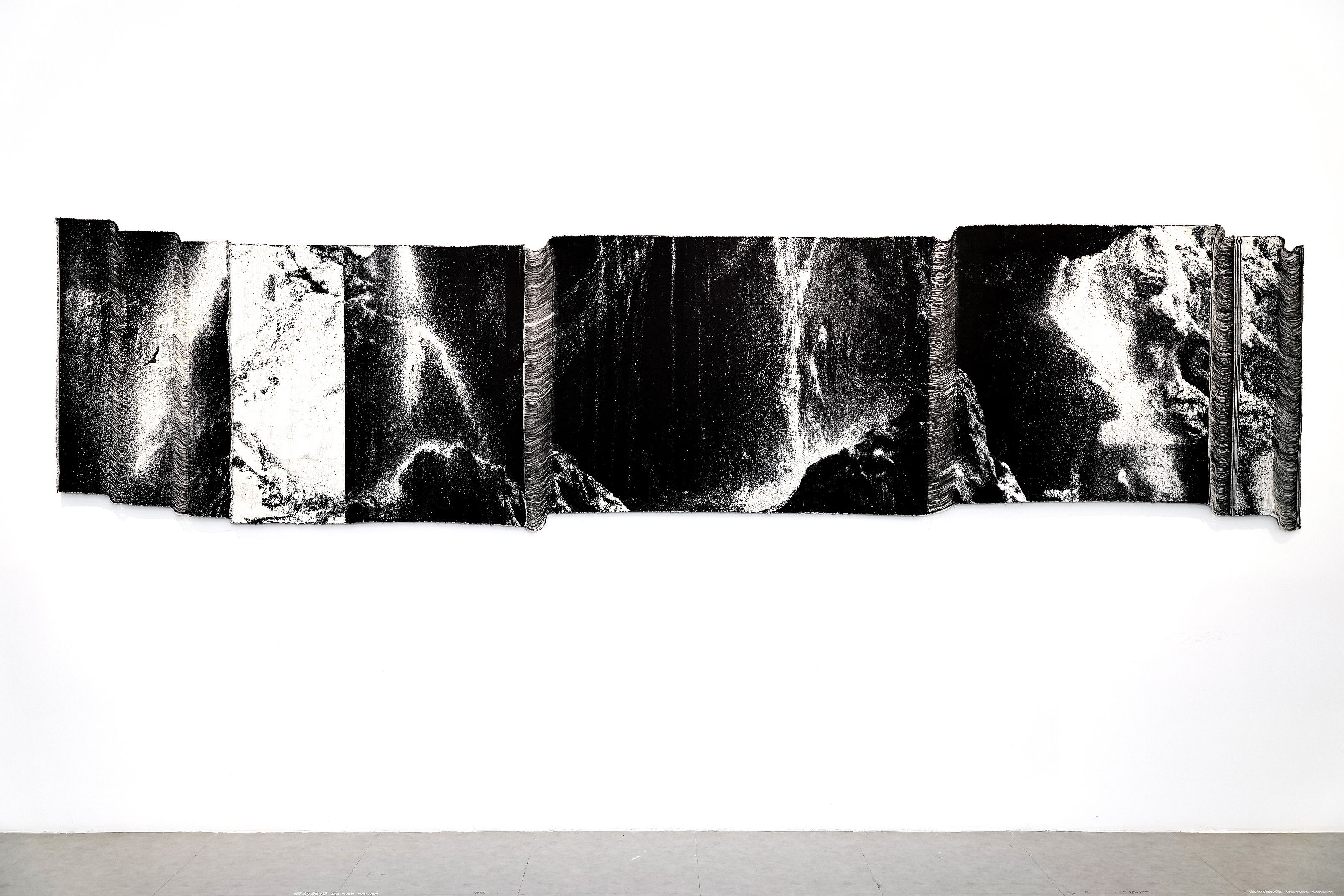
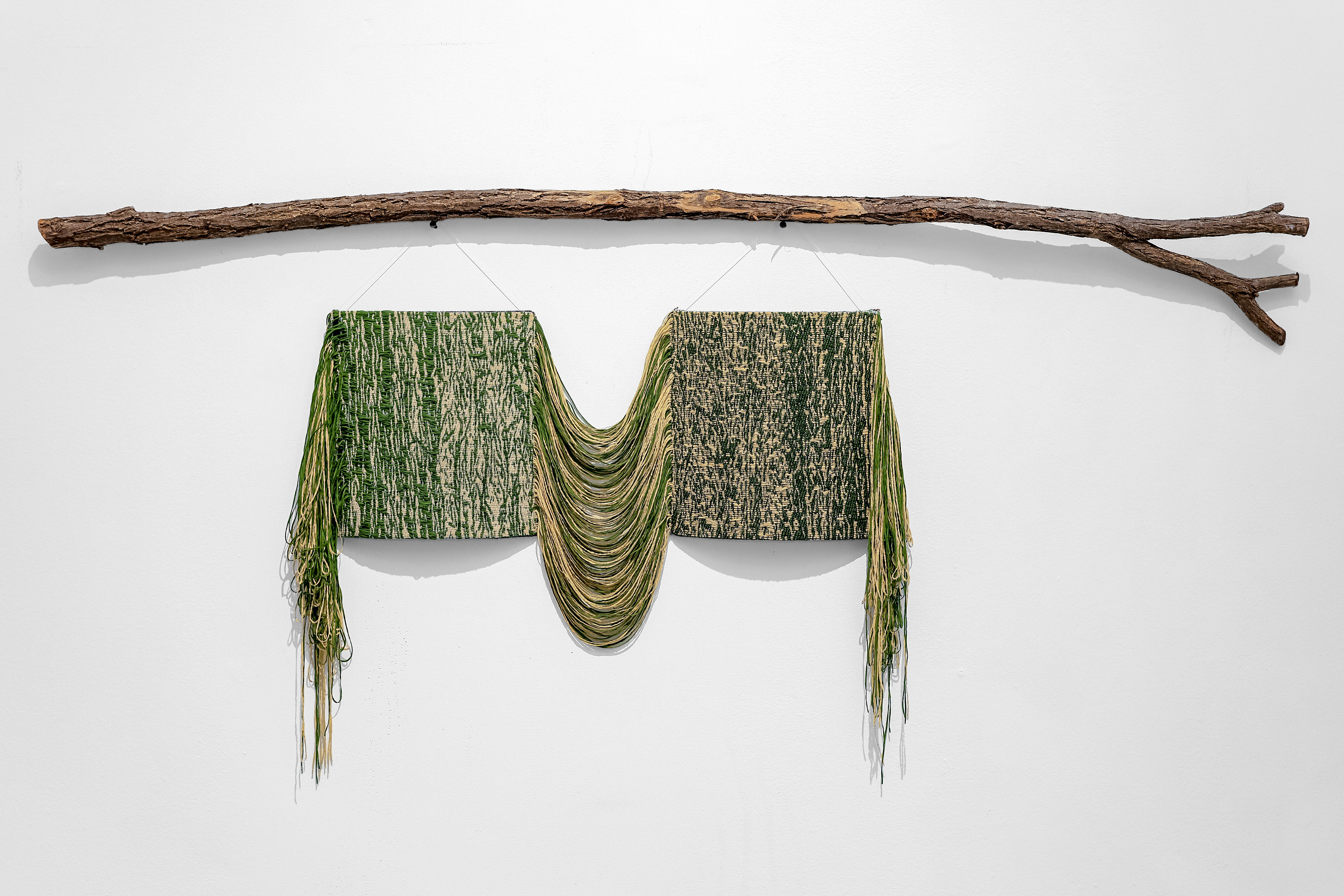
Water is the genesis of River’s artistic journey. Since childhood, she was told that according to the "Five Elements," she lacked water; thus, water became a vital vessel for her consciousness and destiny. TheFall series uses water as a medium but transcends its literal image. Through a high-contrast, double-sided black-and-white weaving structure, the artist captures the plummet of a waterfall, a downward impact that signifies not a loss of weight, but an echo of consciousness and the potential for rebirth. During her years of study and life in Norway, River experienced the dual estrangement of culture and language. In Our Roots, she imagines communication through the arboreal root system. The work consists of two vertically suspended textiles connected at the base; through the interlacing fiber structures at the bottom, she simulates the exchange of information via underground mycelial networks—a metaphor for a silent, non-human communication that transcends spoken language.
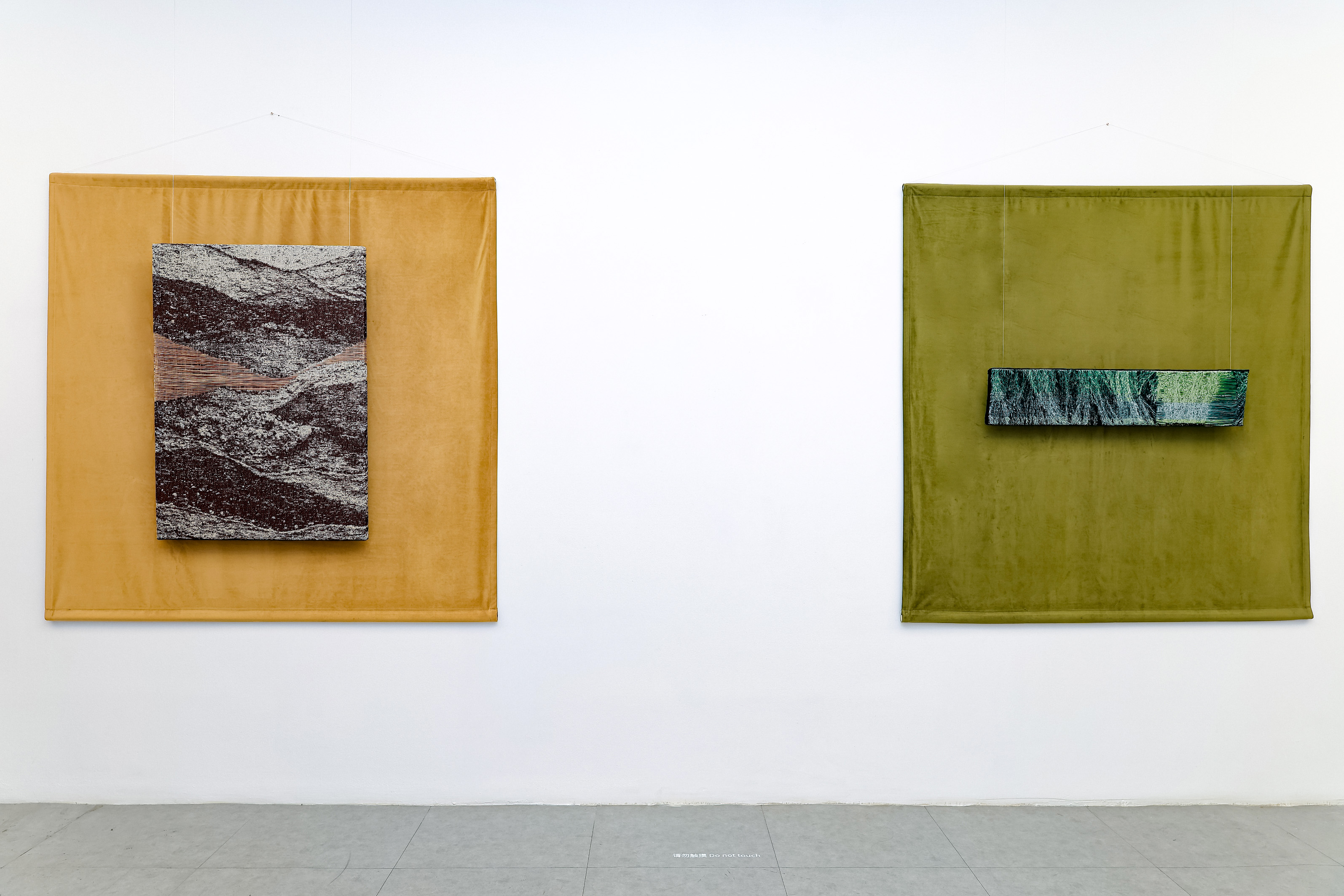
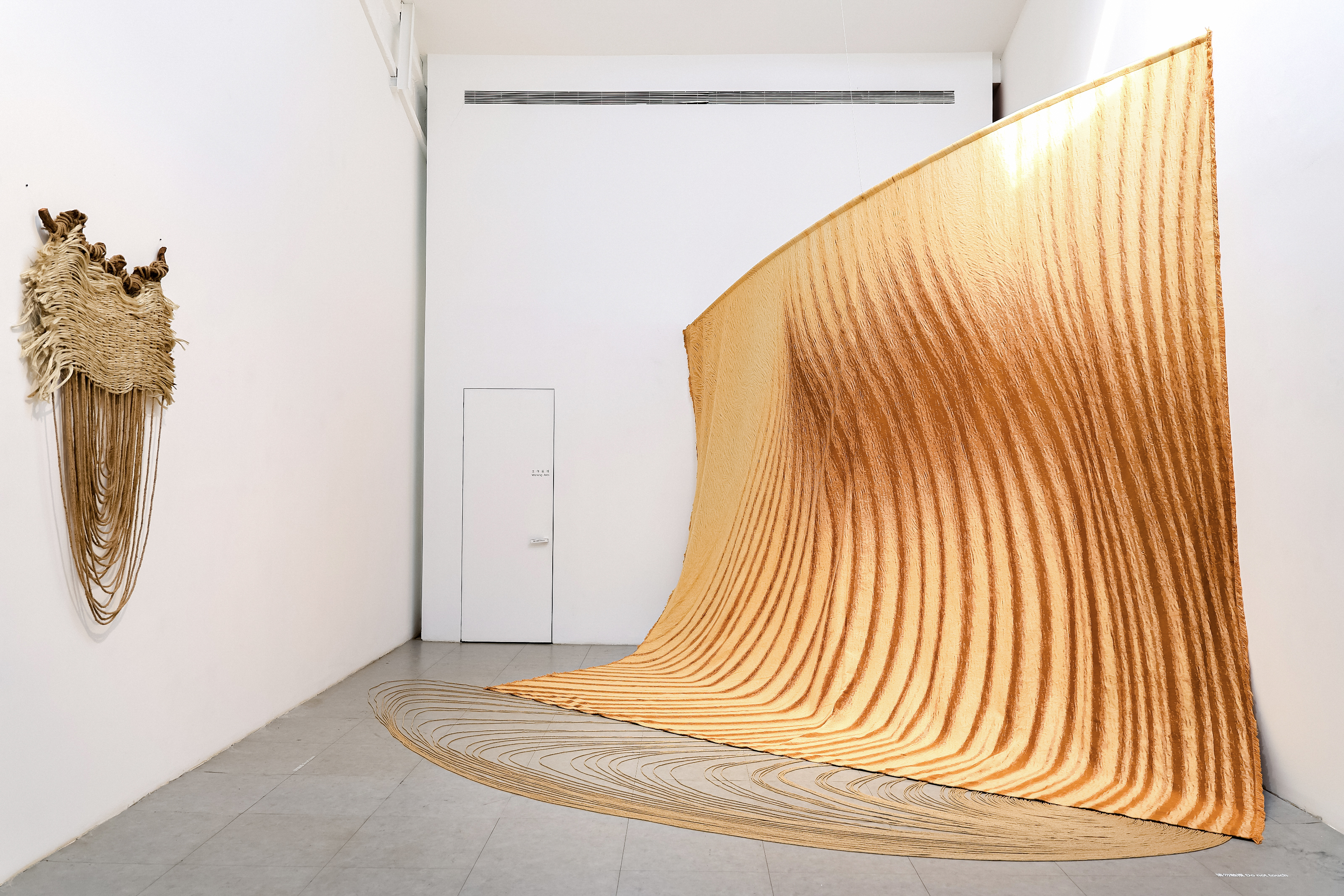
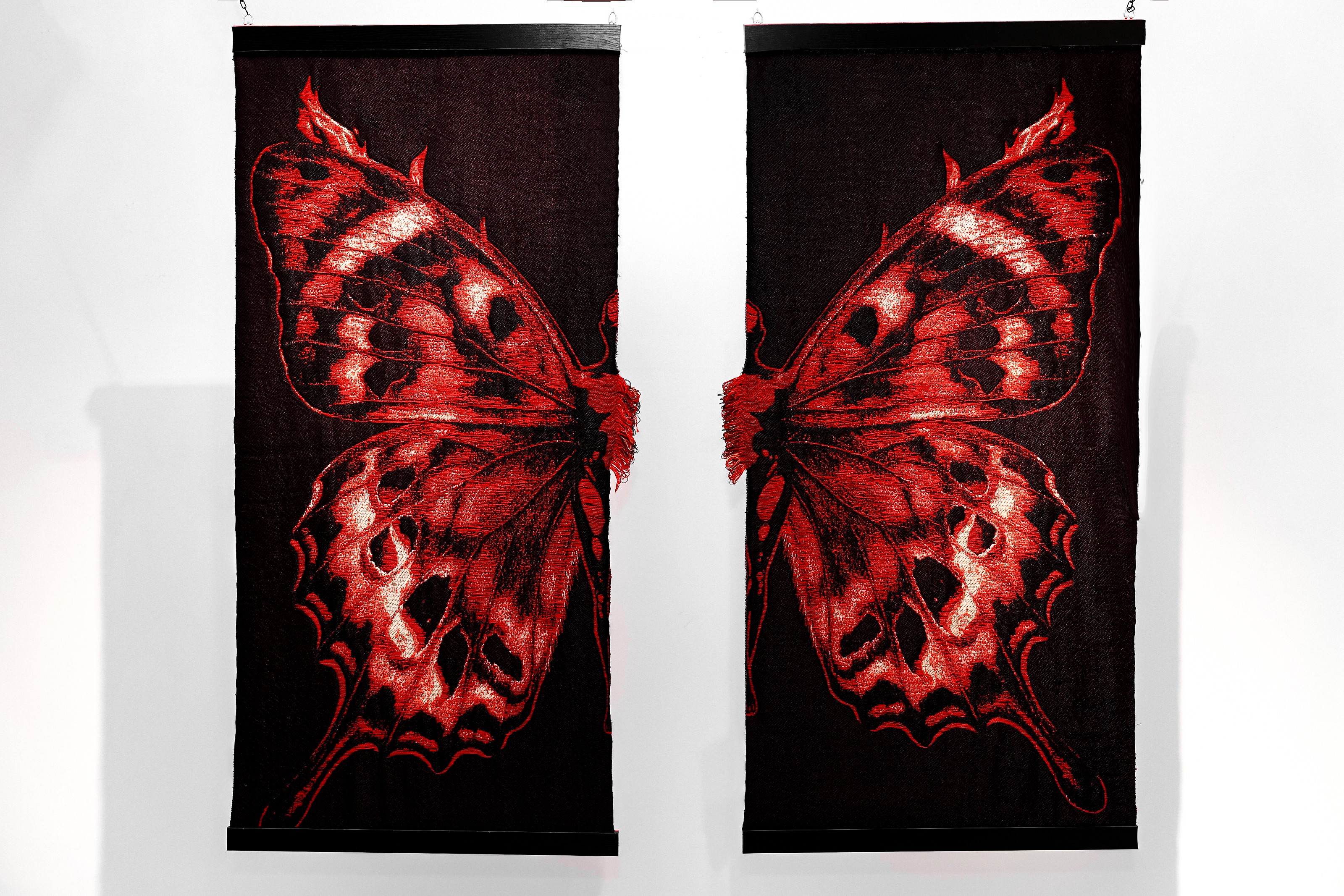
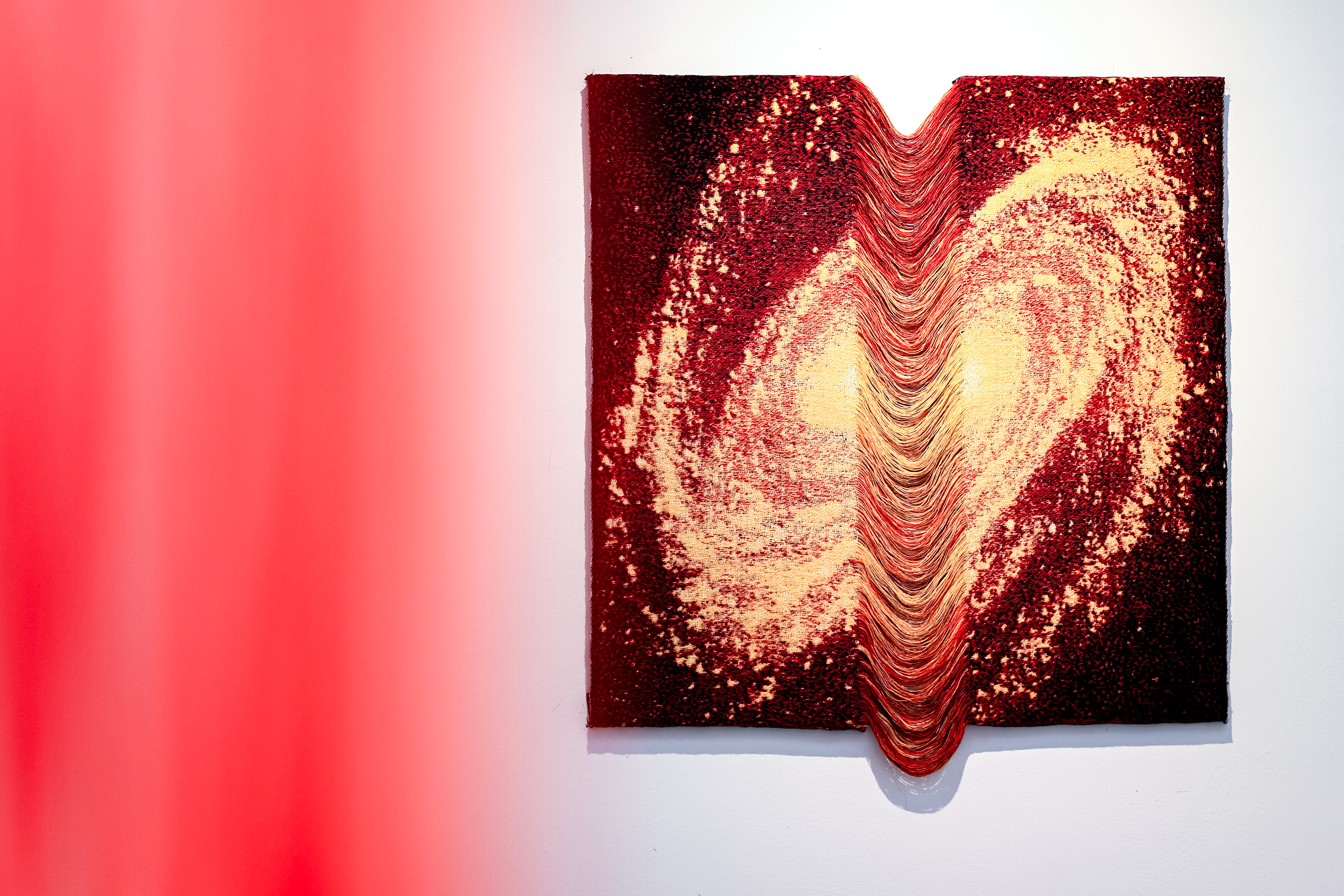
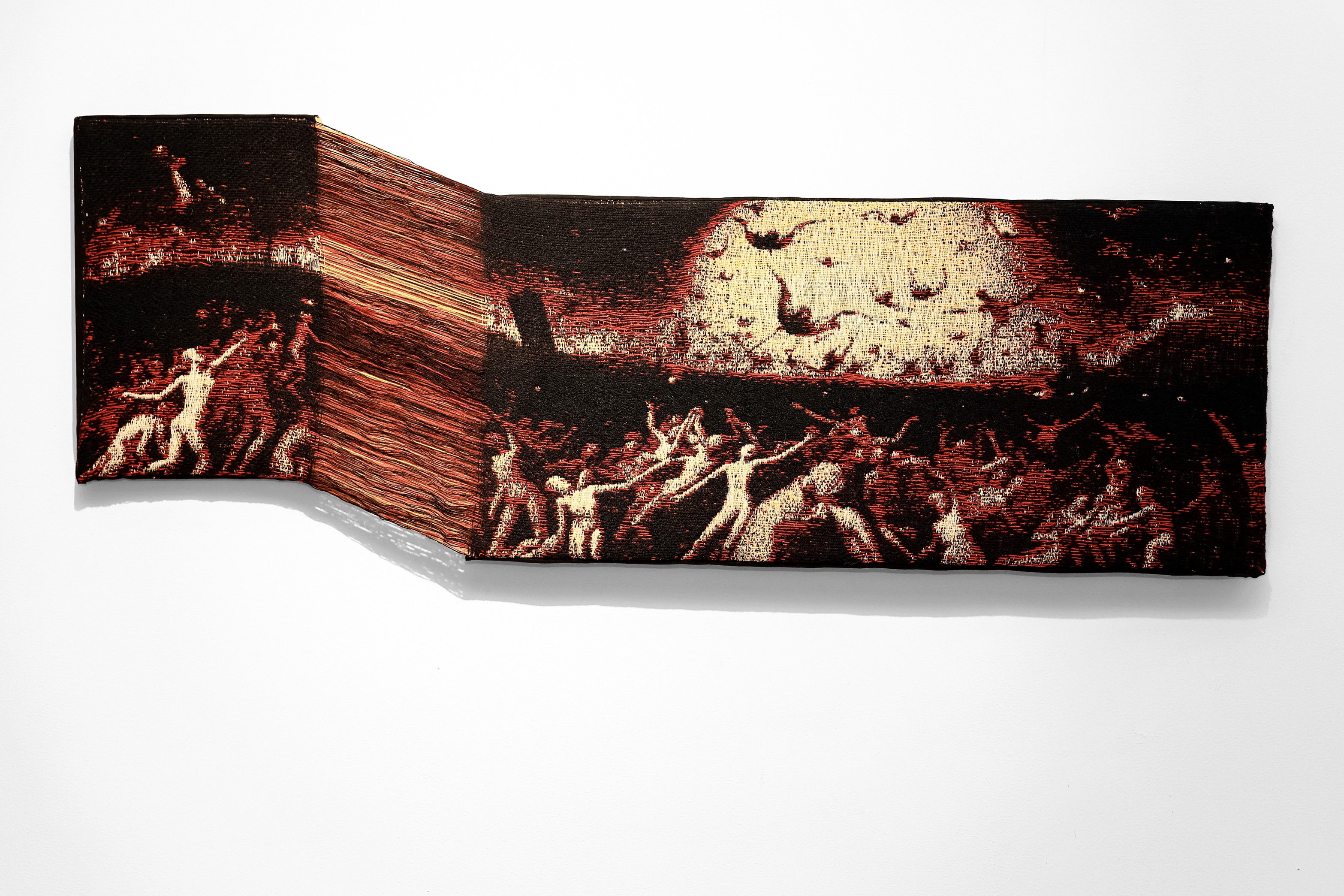
Starting in 2025, River began searching for her identity and spiritual origin within thesoil, viewing soil as a form of bodily kinship—an inherent cultural "mother-tone." In the Skin series, she utilizes handwoven with hemp thread, industrial jacquard, and a blend of plant and industrial fibers to map the textures of the soil’s skin. At times, the drooping bundles of thread resemble exposed strata; at others, the lifted arched surfaces feel like a layer of earth being peeled back. Here, original context and acquired memory are sutured together through weaving, transforming soil into a return to the body and a profound embrace. If the previous works represent an inward quest, then Throb represents an overflow of energy channeled through her perception of Fire. In this 2026 new work, River draws an isomorphism between the searing energy of geological magma and the surging blood of internal organs. She folds red and black textiles into an elliptical "body" structure, where fine red threads radiate like a vascular network from the center, and metallic fibers glimmer within like heat hidden in the depths.
For River, imagination spans cultures, materials, and emotions, while weaving connects imagination, matter, and the body. This mode of imagination even manifests as a concrete symbolic gesture in her work: those soft, myriad "connecting lines" that pull, entwine, and link the textiles like a river. They are part of the work—the flow of energy, and the very act of "imagining" as it crosses and connects boundaries.
Intriguingly, the artist’s name is "River," creating a poignant pun with the exhibition title, How to Imagine a River. From her beginnings in photography to her current practice in digital hand weaving, and from her hometown of Chongqing to the Yangtze River Delta and eventually to Bergen, Norway—8,000 kilometers away—these transitions have forced her to navigate shifts in identity, culture, and geography. How, then, should we imagine "River" the artist? Perhaps the method is the same as imagining a river itself: nomadic, ever-changing, and following the tide of time.
Now, let us return to the opening questions: Does imagination have boundaries? Is it trapped by material form? How does our perception of the world shape the path of our thoughts? Perhaps to imagine a river is to imagine the very possibility of "imagination" itself. Imagination will change, and the river will flow on.
By Pang Yujing
River was born in Chongqing, China. She graduated from Zhejiang University of Media and Communications with a bachelor's degree and from the Bergen Academy of Arts in Norway with a master's degree. She currently resides in Bergen, Norway. Using photography and textiles as her primary mediums, she focuses on the perceptual relationship between natural elements and the body, as well as the flow of energy on both material and spiritual levels. She uses "thread" as a vehicle for thought and emotion, exploring the inherent tension between "connection" and "distance" through the layers, gaps, and extensions of fabric. Her work lies between figuration and abstraction, transforming natural elements such as water, wood, fire, and earth into a visual language about memory, belonging, and existence. Her practice is deeply influenced by the natural environment and her personal state of mind, constantly forming a self - dialogue through the inspiration of nature, responding to the rhythm and changes of the external world through her work.