After dinner
From the series “Fragile images”
This series explores how media images interact with memory. Can media narratives influence memories, blend with them, or invert them, turning them into false ones? How does our sense of reality change in contact with the images they shape? By what principle do speculative narratives embed themselves in reality and shape it?
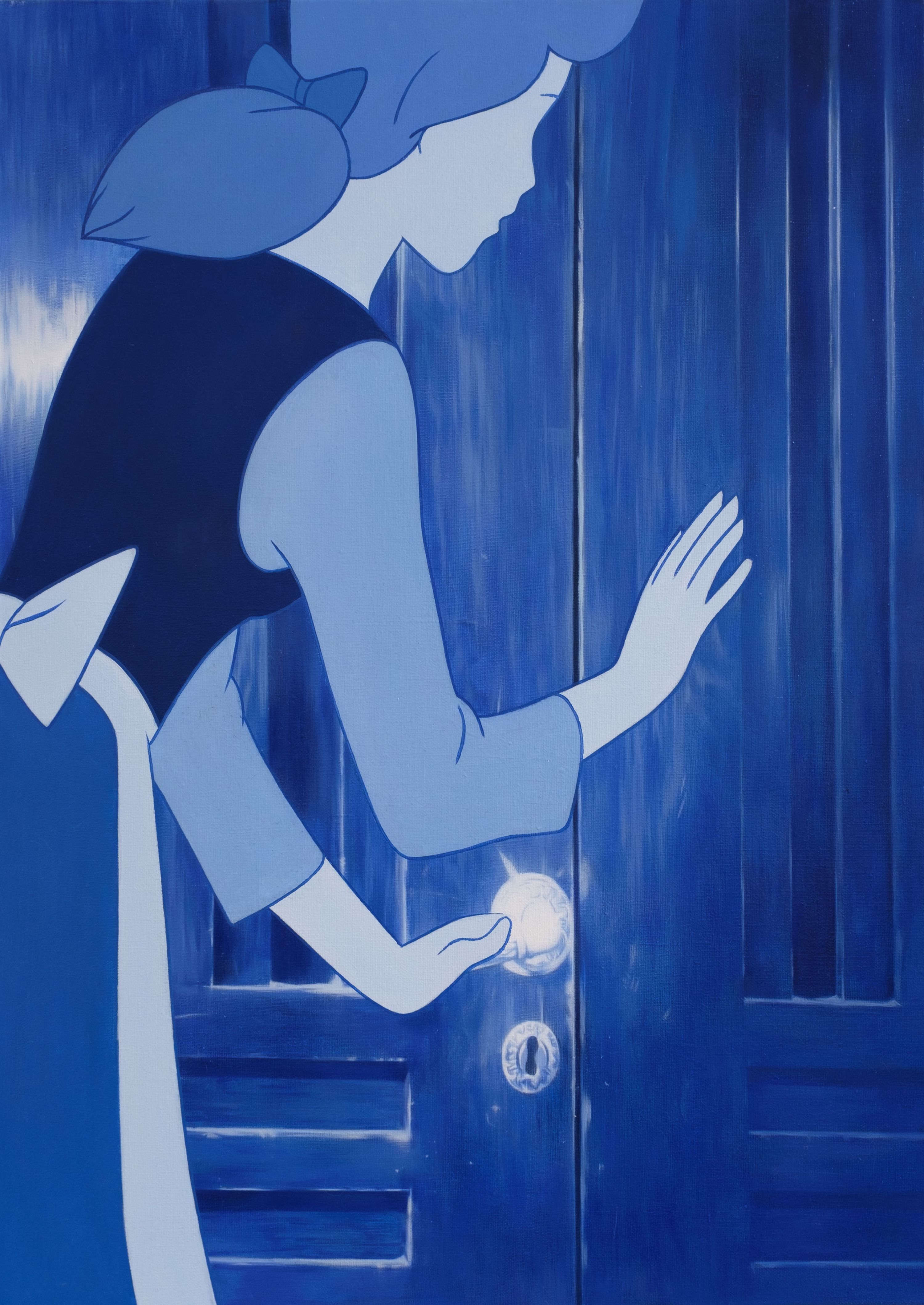
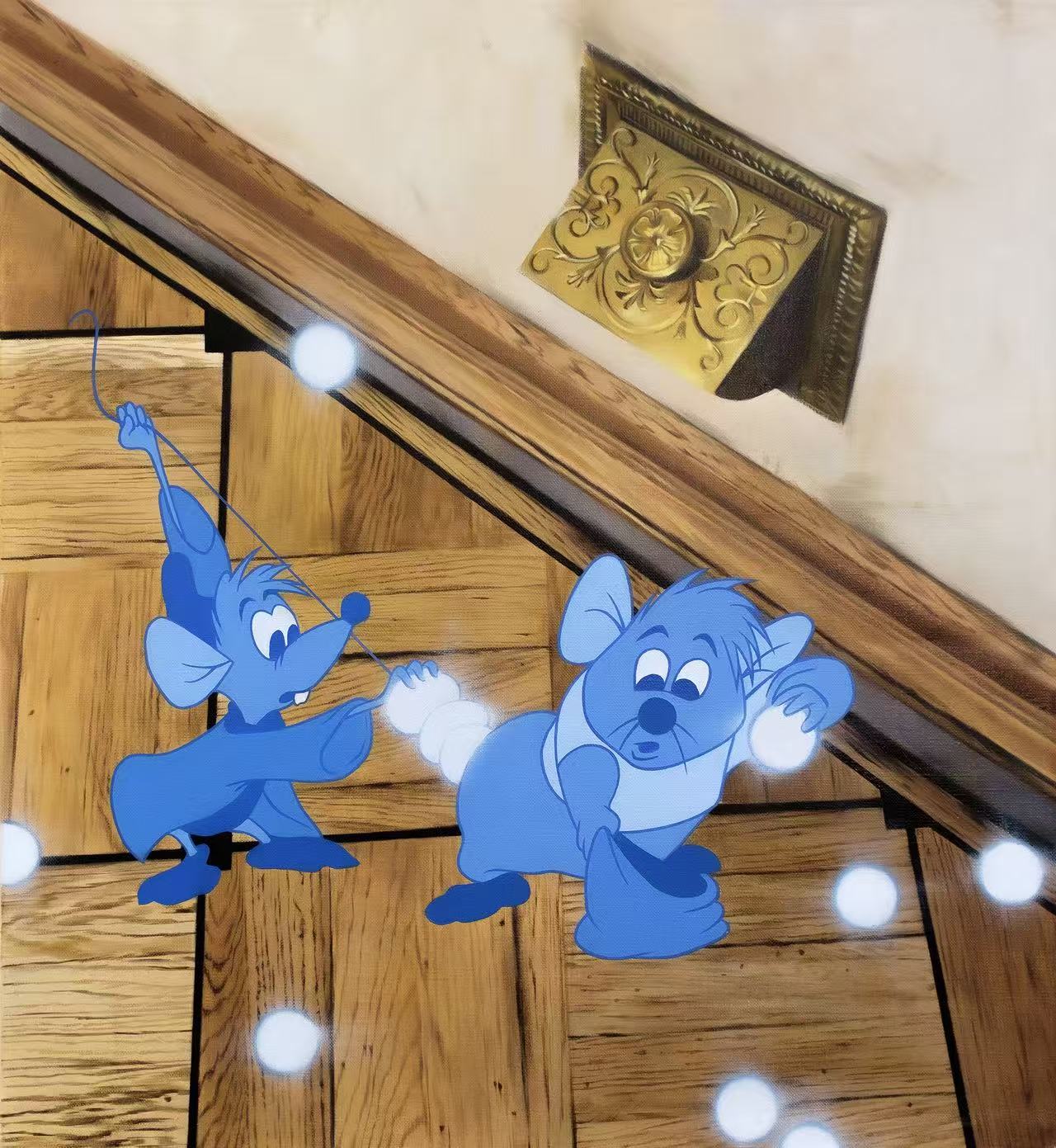
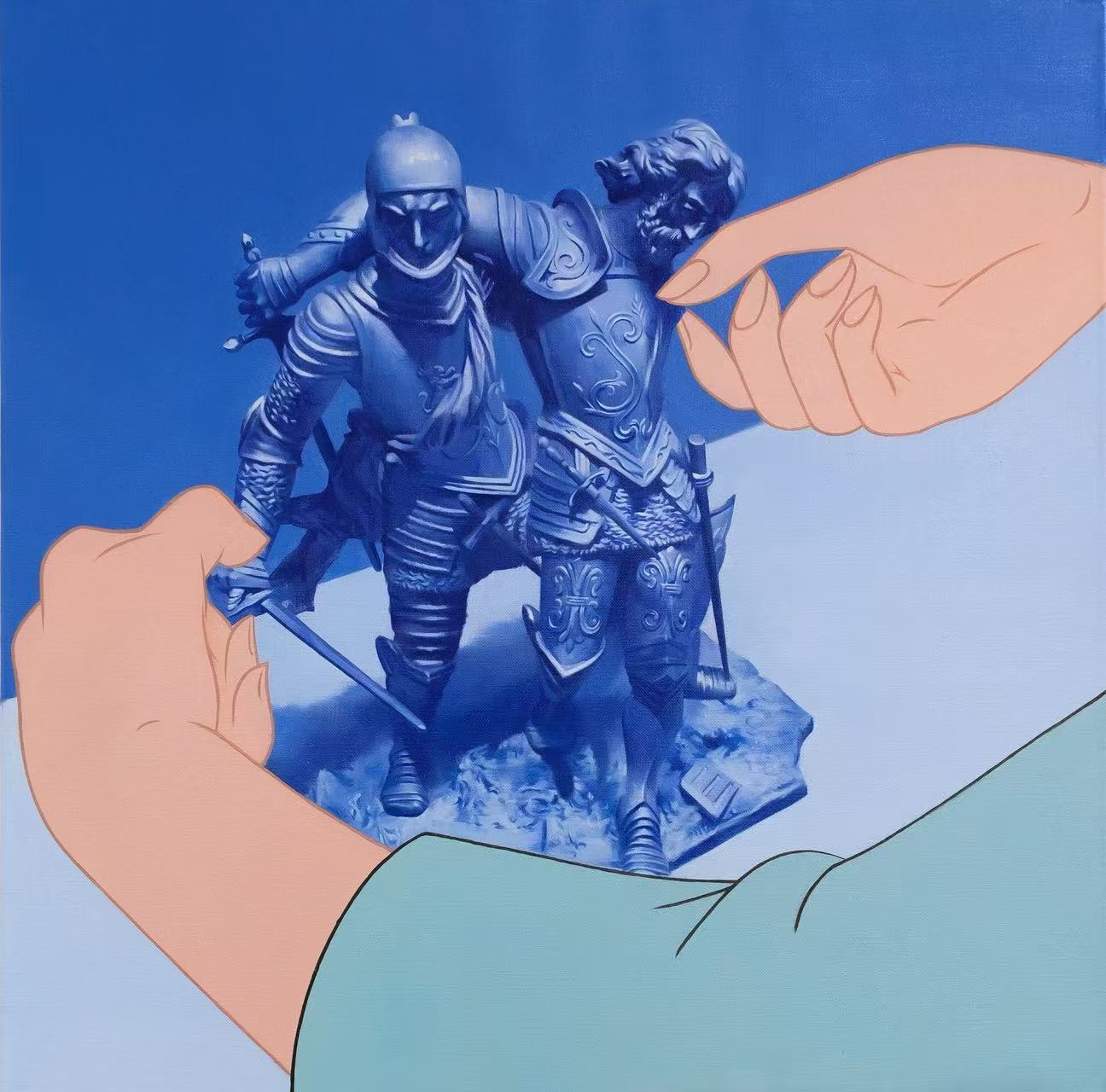
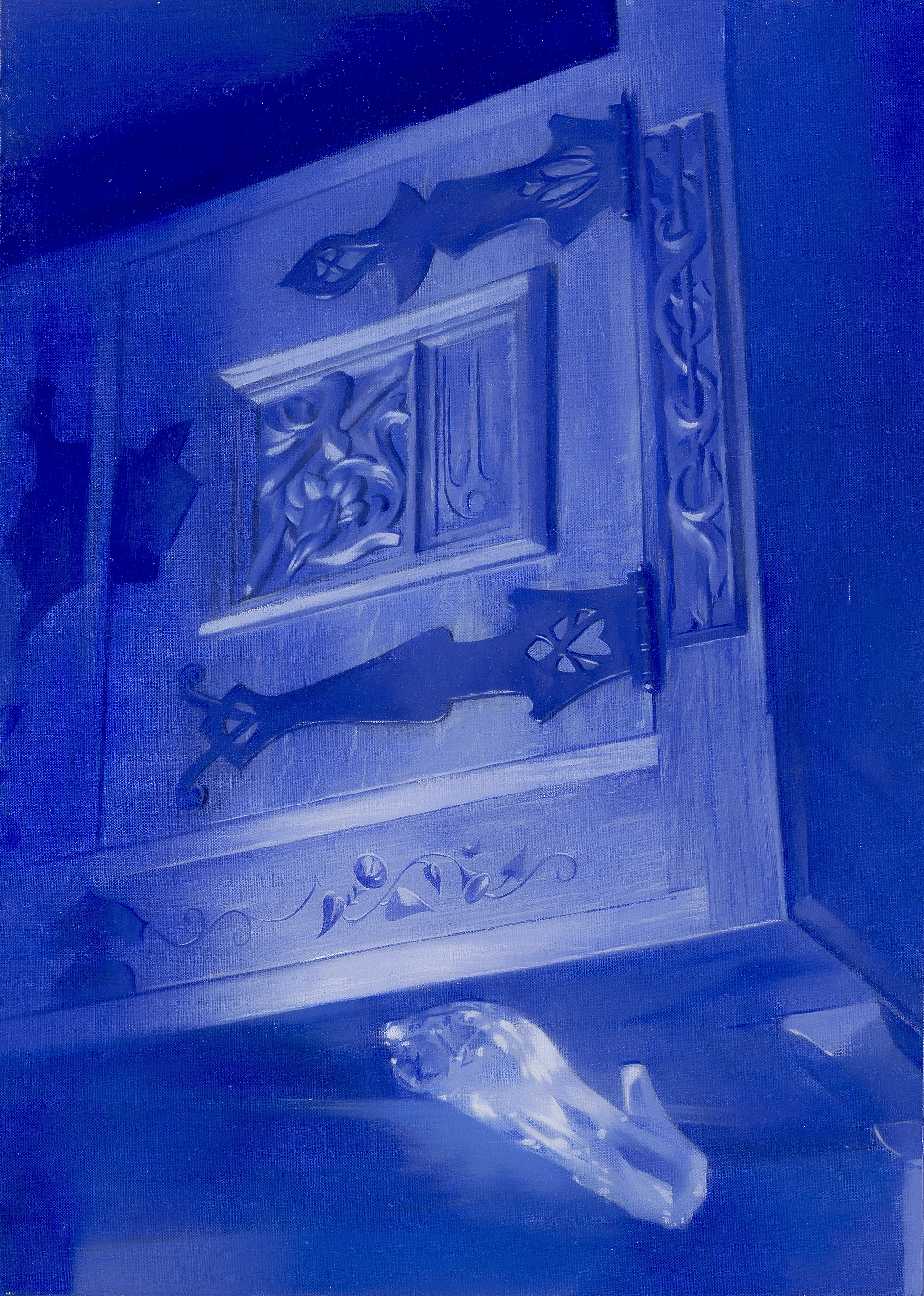
Walking through the Hermitage, I noticed that the space around me looked like a set, despite the fact that such spaces often claim a certain authenticity. It is always said that everything is recreated exactly according to blueprints and archival photos, but a strange feeling of artificiality remains. Nevertheless, this space became part of my memories and remained in my personal archive of photographs. After a while, I rewatched the cartoon "Cinderella," which, like many Disney princess cartoons, evokes similar feelings of strong detachment from reality, and saw an interior element similar to the one in one of the rooms of the Hermitage. At that moment, the unnatural interior of the museum-palace, which, in my opinion, did not correspond to the description of its authenticity, became associated with the image of Cinderella. I became interested in "trying on" characters from the cartoon in the interior of the museum, who could perform similar roles in this new environment, more actively revealing the artificiality of the palace interior.
Thus, in one of the works, a porcelain figurine appeared, which, like any Disney princess, embodies an idealized image of a girl. In several other sketches, three good fairies from the Sleeping Beauty story appeared, repeating the image of the Fairy Godmother from Cinderella. The result was collages telling a new story with a broken narrative. The image of the princess multiplies, the plot of the fairy tale ceases to be linear, the characters of the cartoons are inscribed in the entourage of the museum-palace.
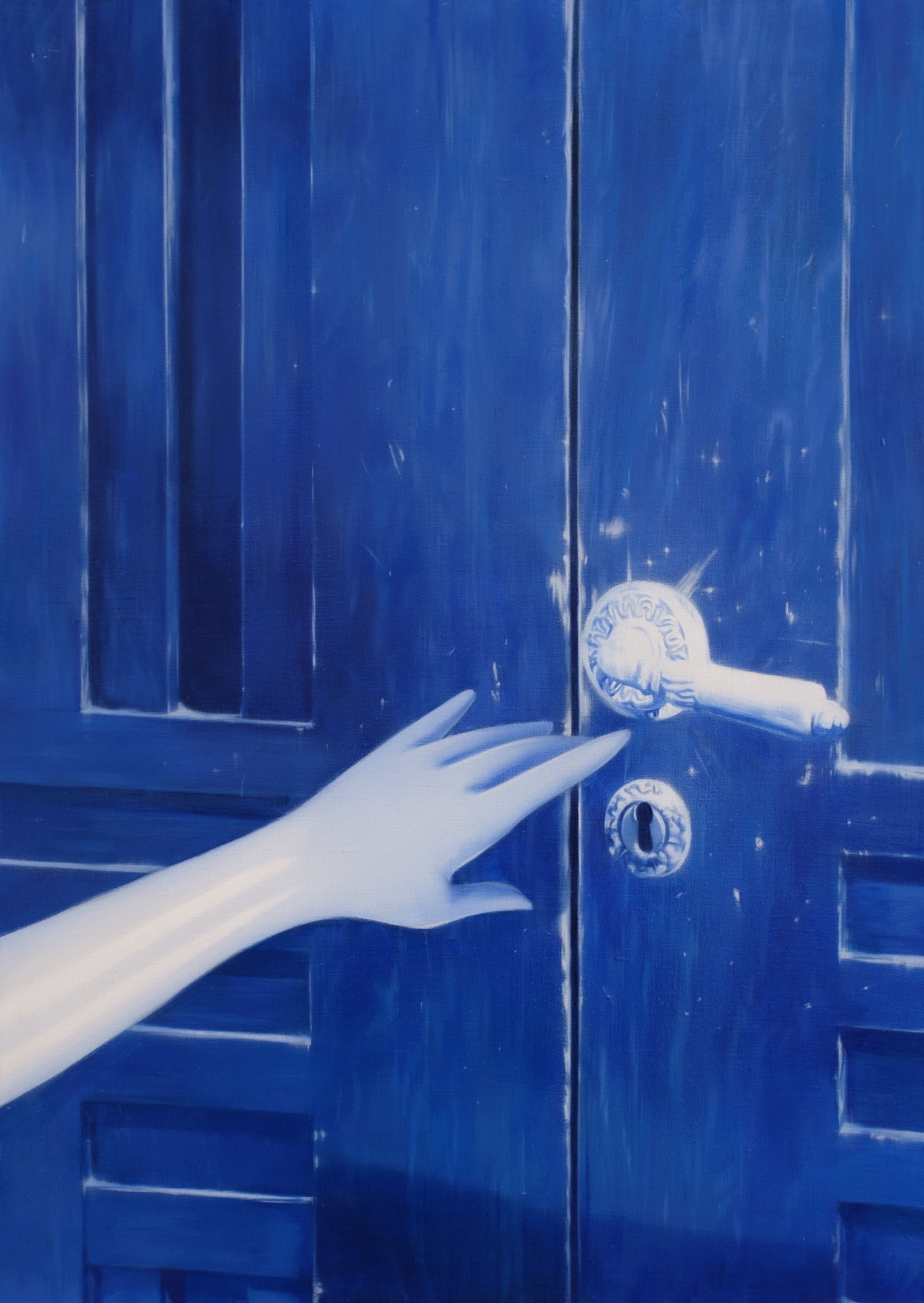
The blue color, uniting all 8 works of the series, resembles the glow of the screen. It indicates the digitalization of images, which today makes it possible to rewrite any narratives. By rearranging characters performing the same function in different stories, their artificially constructed nature is revealed, as well as the desire on the part of the media to form in us a holistic, indivisible view of reality. Thus, a collection is created in the series, which makes it possible to track how speculative narratives masquerade as reality, shaping it, and forcing reality, in turn, to mimic them.
Born on 2001 in Yeysk, Russia
In my practice, I explore the nature of images and digital visuals produced by contemporary media, as well as the relationship between these images and the reality we inhabit. I am interested in how images exist on the internet, how they are formed and integrated into the world, and how they subsequently influence it. I study the ways in which we interact with narratives transmitted through media, and what exactly these narratives aim to tell us.
I use the internet as an alphabet of ready-made images, transforming the found imagery, thereby emphasizing the peculiarities of their existence in the digital environment and attesting to the inevitable breakdown in the process of their detachment from physical reality. It is important for me to show how consumed content regulates our attention and shapes aesthetic coordinates, how it forces us to construct and perceive life, following pre-set narratives. I strive to reveal the potential of the image to produce desire, to show that anything can become part of a consumerist system.
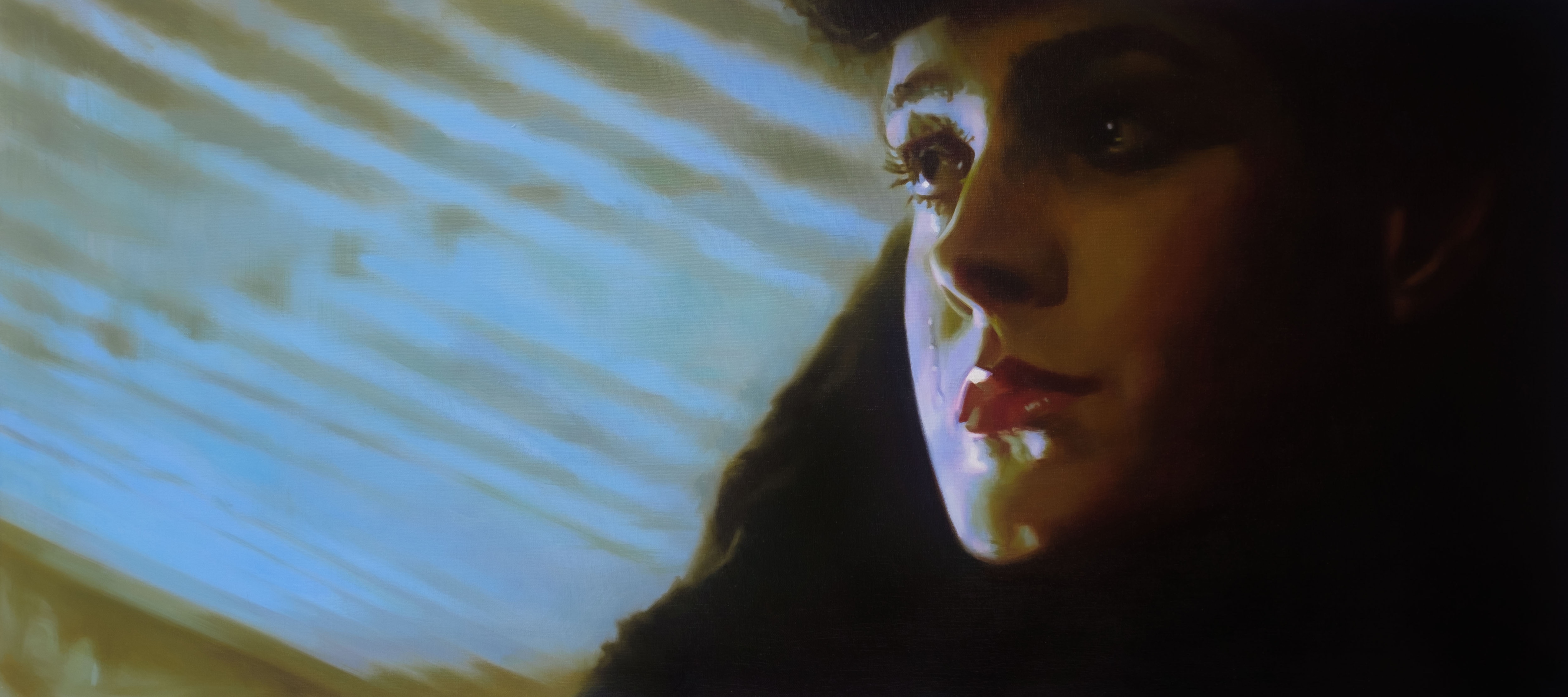
As my primary medium, I employ painting. I often resort to the effect of chromatic aberration, enhancing the brightness in the image. Through this, I aim to emphasize the material, transient nature of what is depicted. As a result of the lengthy creation of each work, there is an accumulation of intensity within the resulting image – this emphasizes the intensity of the scenarios offered to us.